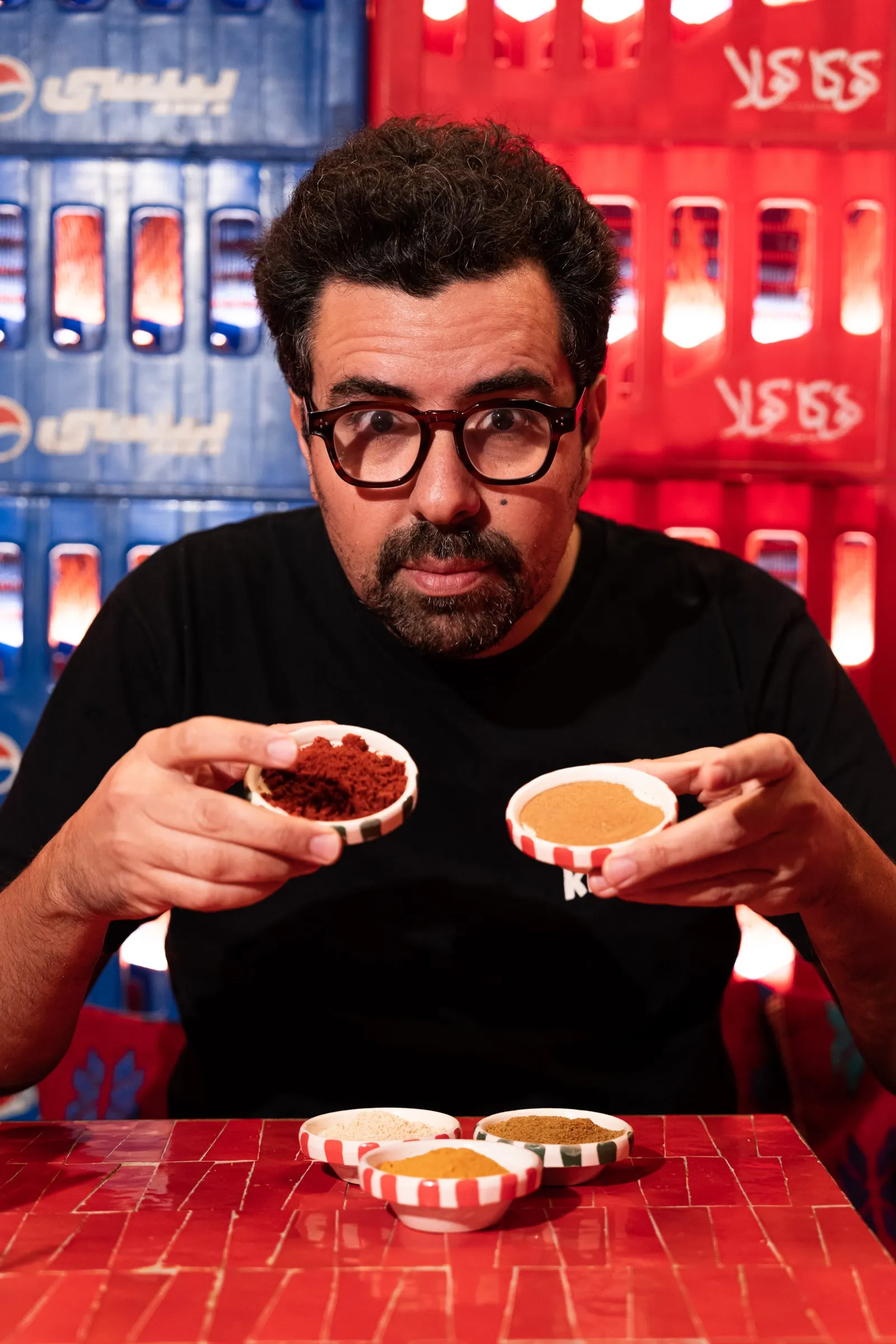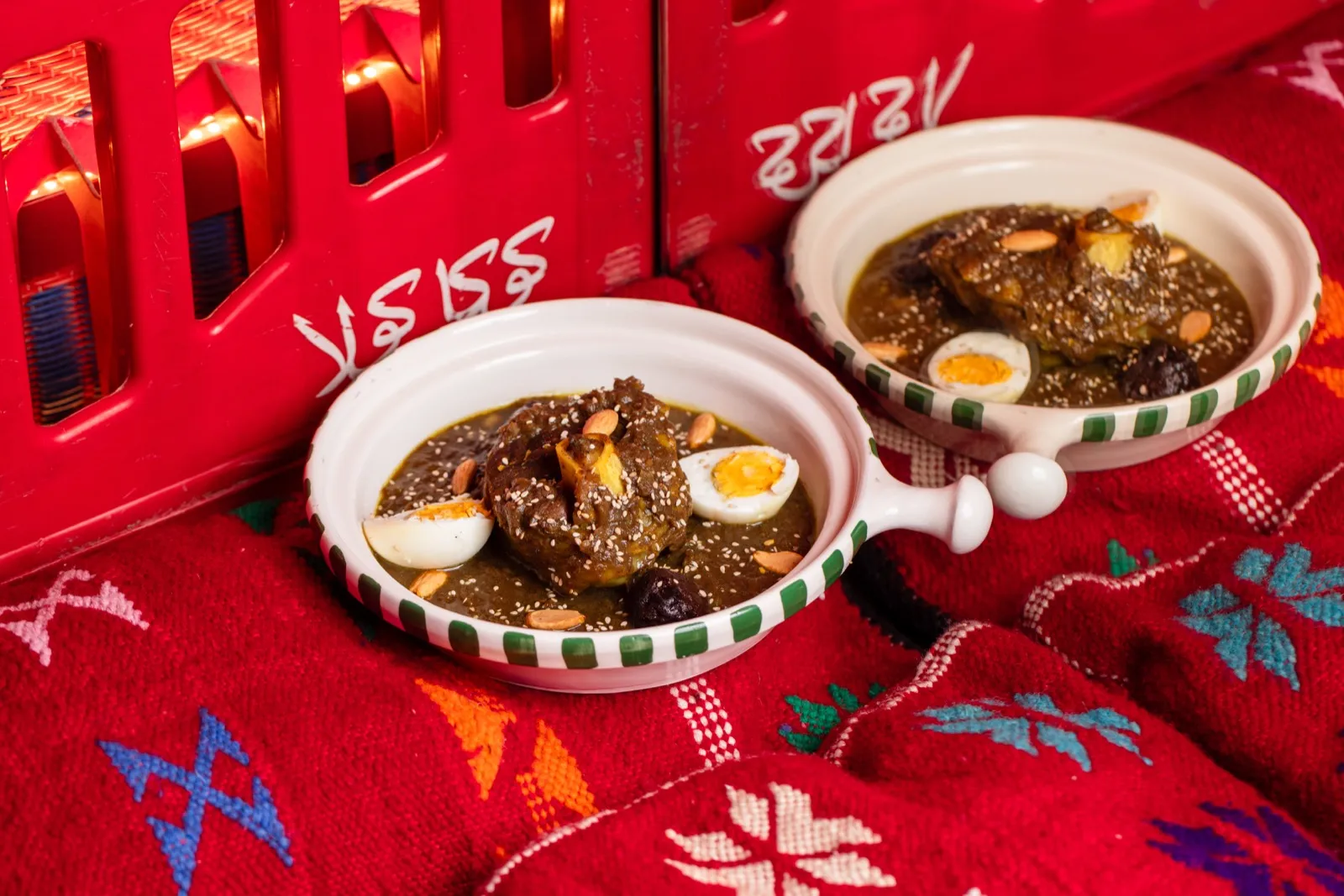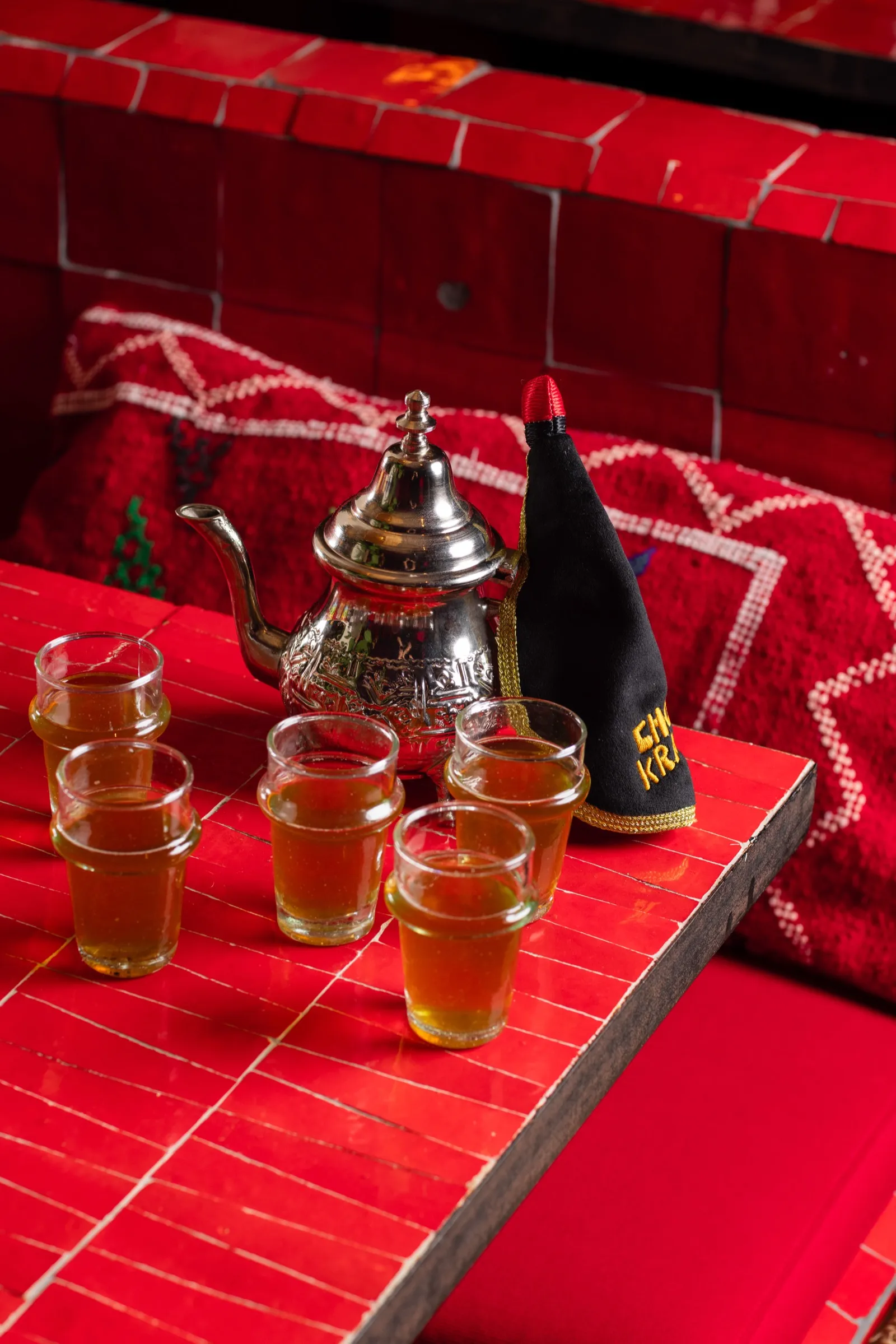
When you walk into a Choukran restaurant, look at the walls. Touch them if you dare. Those mosaics you see, those small pieces of terracotta assembled into geometric patterns — they're not decoration. They're art. Art that is over a thousand years old.
What is zellige?
Zellige is a traditional Moroccan decorative art consisting of an assembly of small pieces of terracotta, glazed and cut by hand, forming geometric patterns of great complexity. Each piece — called a furma — is individually cut with a special hammer, making each zellige unique.
It's not an industrial tile. It's not an imitation. It's a living art, practised since the 10th century in Morocco, primarily in Fes, the country's spiritual and artisanal capital.
An entirely handcrafted process
Making zellige is a long and demanding process. The clay is first extracted, kneaded, moulded into flat tiles, then dried in the sun for several days. The tiles are then glazed — each colour is a secret recipe kept by artisan families — then fired in traditional high-temperature kilns.
Once fired, the tiles are turned over and cut by hand, one by one, with a small hammer and chisel. The artisan — the maâlem — cuts each piece to the exact shape required by the pattern. It's work of millimetric precision that takes years of training.
The artisans of Fes
At Choukran, our zellige comes from Fes. They are made by master artisans — maâlems — whose expertise has been passed from father to son for generations. These men are the heirs of a thousand-year tradition that has adorned Morocco's most beautiful palaces, mosques and riads.
Working with them means entering a different relationship with time. Zellige cannot be rushed. It must be earned. Each wall in our restaurants required weeks of patient, meticulous work.
Each piece is unique
That's the beauty of handcrafted zellige: no two pieces are identical. The colour variations, slight imperfections, nuances of the glaze — all of this gives zellige its living character. It's not a flaw, it's a signature. Proof that a human hand was there.
When you look at a zellige wall at Choukran, you're looking at the work of dozens of hands. Each piece has been touched, turned, cut, placed. It's a contact art, a tactile art, a profoundly human art.
A cultural history
Zellige tells the story of Morocco. Its geometric patterns reflect the country's multiple influences: Islamic in their abstraction and search for infinity, Andalusian in their refinement, Amazigh in their connection to earth and symbols. Zellige is a cultural crossroads in itself.
In Islamic art, geometry is a path to the divine. Zellige patterns represent nothing figurative — they explore the mathematical order of the universe, repetition, symmetry, infinity contained within the finite. It's a visual meditation.
Contemporary relevance
Today, zellige is experiencing an international revival. Architects and designers worldwide are rediscovering its timeless beauty. But at Choukran, zellige is not a trend. It's a conviction. The conviction that the walls of our restaurants must match what we put on our plates: craftsmanship, time, soul.
The metaphor of small pieces
There's something beautiful in the idea of zellige: thousands of small pieces, individually modest, that once assembled create something grand. It's perhaps the most beautiful metaphor for what we try to do at Choukran: gather simple gestures, humble ingredients, ancient traditions — and together create something that transcends the sum of its parts.
Like zellige, Moroccan cuisine is an art of assembly. Each spice, each vegetable, each gesture is a small piece. And when everything is brought together with care, patience and love — the result is a mosaic of flavours as beautiful as the ones adorning our walls.