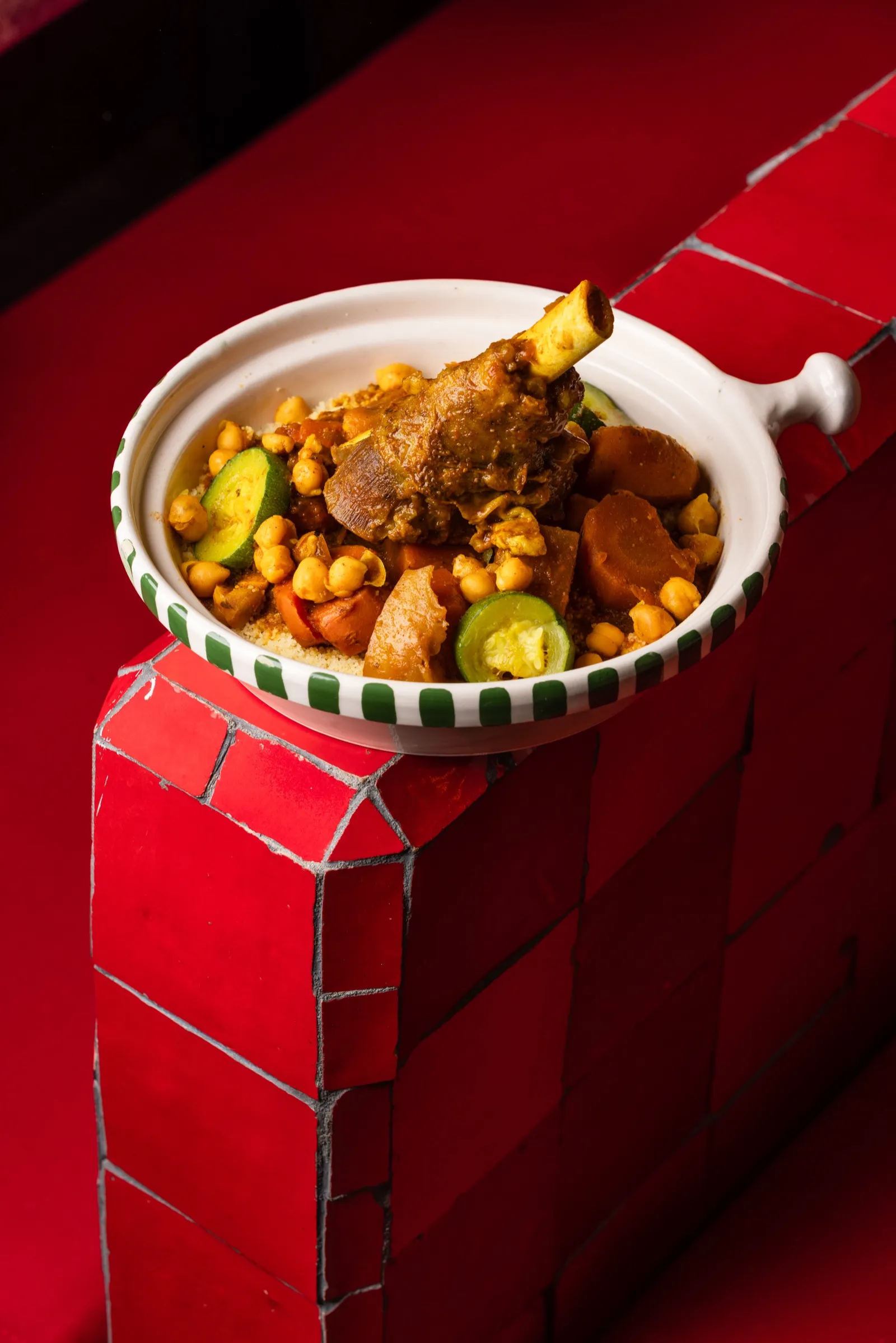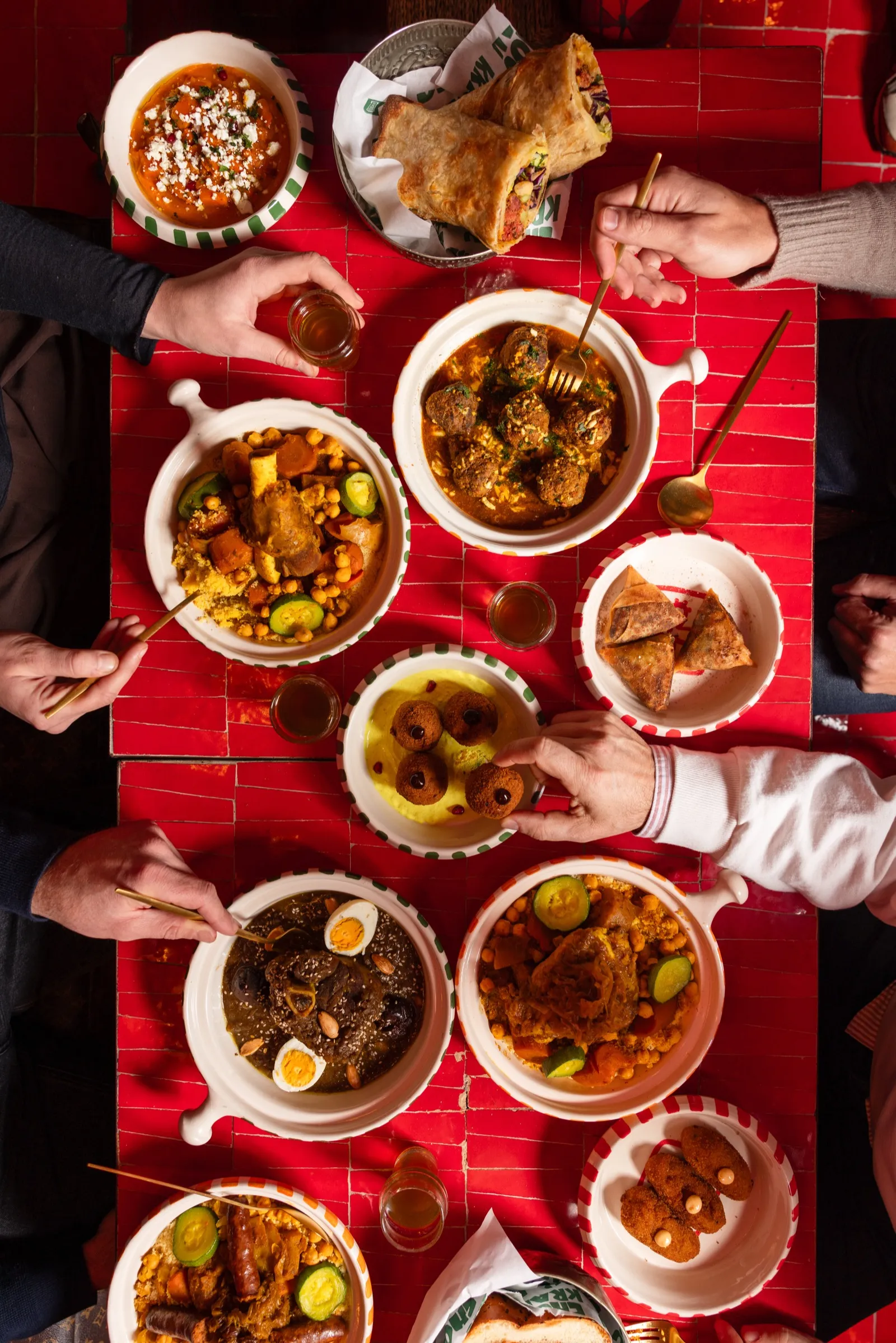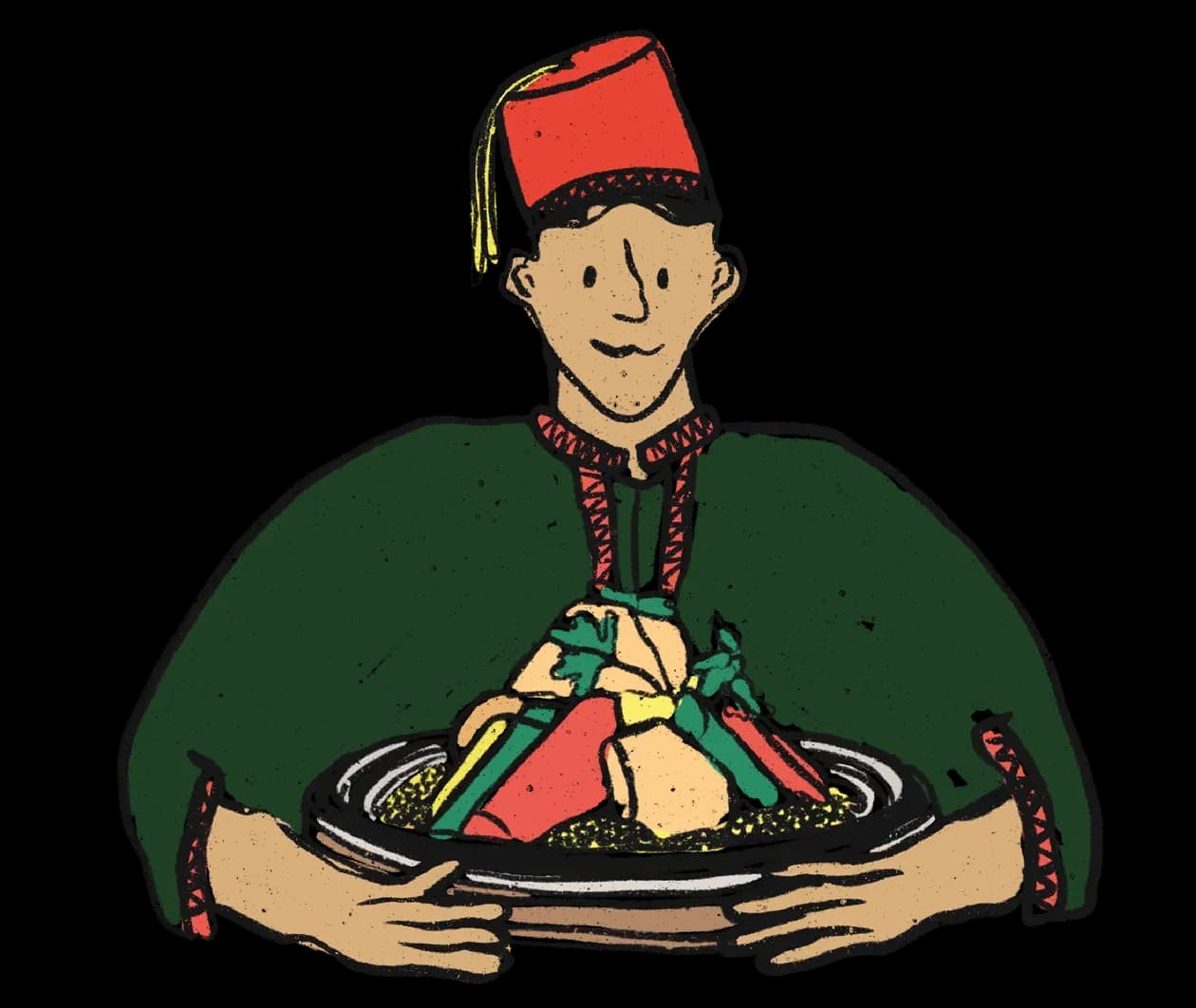
Few dishes in the world share their name with both the recipe and the vessel that holds it. The Moroccan tajine is one of those exceptions. It is at once a traditional dish and an object: that earthenware plate topped with a conical lid that has become one of the most recognisable symbols of Moroccan cuisine.
But the tajine is much more than that. It tells a story. The story of a country that has always taken its time to cook. The story of a culture that believes the best things must be earned and that patience is an ingredient in its own right.
The vessel: an object of genius
The earthenware tajine is not merely a kitchen utensil. It is a feat of ingenuity. Its conical lid plays an essential role in cooking: it allows steam to circulate naturally and then fall back onto the food, preserving moisture and concentrating flavours. This circulation creates a unique cooking environment where nothing is wasted.
The earthenware distributes heat gradually and evenly, allowing gentle cooking that respects each ingredient. It is this slowness that gives the tajine its characteristic depth of flavour.
A philosophy of slowness
In a world where everything is speeding up, the tajine reminds us that cooking needs time. It is not simply about mixing ingredients and heating them up. It is about letting time do its work, allowing flavours to develop gradually, respecting the natural rhythm of each ingredient.
A tajine is not prepared in thirty minutes. Depending on the recipe, cooking can last from one hour to several hours in order to achieve rich flavours and particularly tender meat. It is this patience that makes all the difference.
In Morocco, nobody worries about how long a tajine takes to cook. They simply know that it will be ready when it is ready. And it is precisely this relaxed relationship with time that gives it all its character.
Regional diversity
One of the greatest treasures of the tajine lies in its diversity. Each region of Morocco has developed its own versions, reflecting local produce, family traditions and the cultural influences of each territory.
The chicken tajine with preserved lemon and olives is probably the most iconic. It pairs the tenderness of chicken with the acidity of preserved lemon and the subtle bitterness of olives, creating a remarkable balance of flavours.
The lamb tajine with prunes and almonds perfectly illustrates the Moroccan art of sweet-savoury. The sweetness of prunes and the crunch of almonds contrast with the richness of lamb for a result that never fails to surprise.
In Marrakech, the tanjia — a variation cooked in an earthenware jar in the ashes of a hammam — represents a different but equally authentic style.
In coastal regions, you find fish tajines with vegetables and herbs, while mountainous areas favour meats and root vegetables.
The tajine and Moroccan time
The tajine embodies a fundamental value of Moroccan culture: respect for time. In Morocco, time is not an enemy to fight but an ally to cultivate. This philosophy is reflected in the way the country cooks, eats and shares its meals.
A meal around a tajine is never rushed. You settle in, talk, wait for the dish to reveal all its flavours. The lid is lifted like a moment of revelation, releasing a cloud of fragrant steam that heralds the feast.
Why the tajine remains irreplaceable
In Moroccan cuisine, the tajine perfectly embodies the values of Moroccan gastronomy: sharing, generosity, patience and respect for produce. It is a dish that never cheats. Its flavours come from time, ingredients and craftsmanship, never from shortcuts.
At Choukran, we prepare our tajines with the same respect for time and tradition. Because we know that a rushed tajine is not really a tajine. It is simply a stew. And the difference between the two is exactly what makes Moroccan cuisine so unique.
FAQ
- What is a Moroccan tajine?
- The tajine is both a traditional Moroccan dish and the earthenware vessel in which it is prepared.
- Why is the tajine lid conical?
- Its shape allows steam to circulate naturally and then fall back onto the food, preserving moisture and concentrating flavours.
- What is the most famous tajine in Morocco?
- The chicken tajine with preserved lemon and olives is probably the most iconic.
- How long does it take to prepare a tajine?
- Depending on the recipe, cooking can last from one hour to several hours in order to achieve rich flavours and particularly tender meat.
- Why is the tajine so important in Moroccan cuisine?
- Because it perfectly embodies the values of Moroccan gastronomy: sharing, generosity, patience and respect for produce.