Marrakech is a city to be eaten as much as visited. Behind every door, around every corner, hides a speciality that tells the story of the ochre city. Here are the dishes that make Marrakech's culinary reputation.
Tanjia: the emblem of Marrakech
If every Moroccan city has its signature dish, Marrakech's is undeniably the tanjia. This quintessentially Marrakech dish is prepared in an earthenware jar entrusted to the fernatchi, the keeper of the hammam's public oven. The meat — usually veal shank or lamb shoulder — marinates overnight with ras el hanout, saffron, aged butter, garlic and preserved lemon.
The next day, the jar is retrieved and opened before the guests. The meat is so tender it falls apart at the touch. Tanjia is traditionally a men's dish, prepared for outings with friends or picnics. It's a dish of absolute slowness, and its flavour is incomparable.
Chicken tajine with preserved lemon
Chicken tajine with preserved lemon is one of Marrakech's most iconic dishes. The chicken simmers gently with green olives, preserved lemon whose acidity has softened over time, ginger, saffron and fresh coriander.
The result is a dish of remarkable delicacy, where the lemon's acidity, the sweetness of spices and the tenderness of chicken create a perfect balance. It's the tajine every Marrakech visitor should try first.
Kémias: the art of the starter
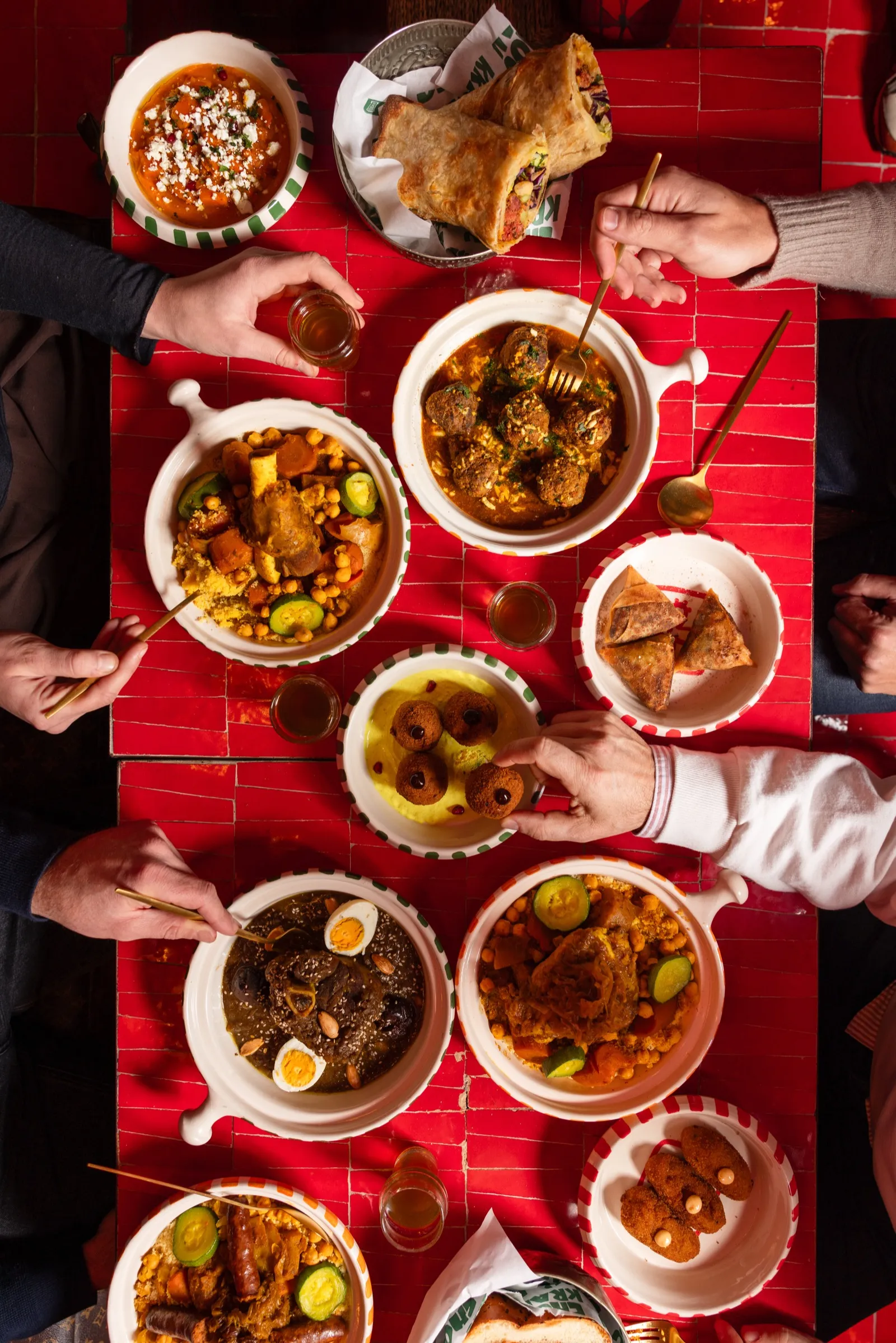
In Marrakech, meals almost always begin with kémias — those small starters placed at the centre of the table. Aubergine zaalouk, pepper taktouka, cinnamon carrot salad, marinated olives: each dish is a concentrate of Mediterranean and Moroccan flavours.
Kémias are not just appetisers. They are an art of living, an invitation to share, the opening chapter of a meal that promises to be generous.
Friday couscous
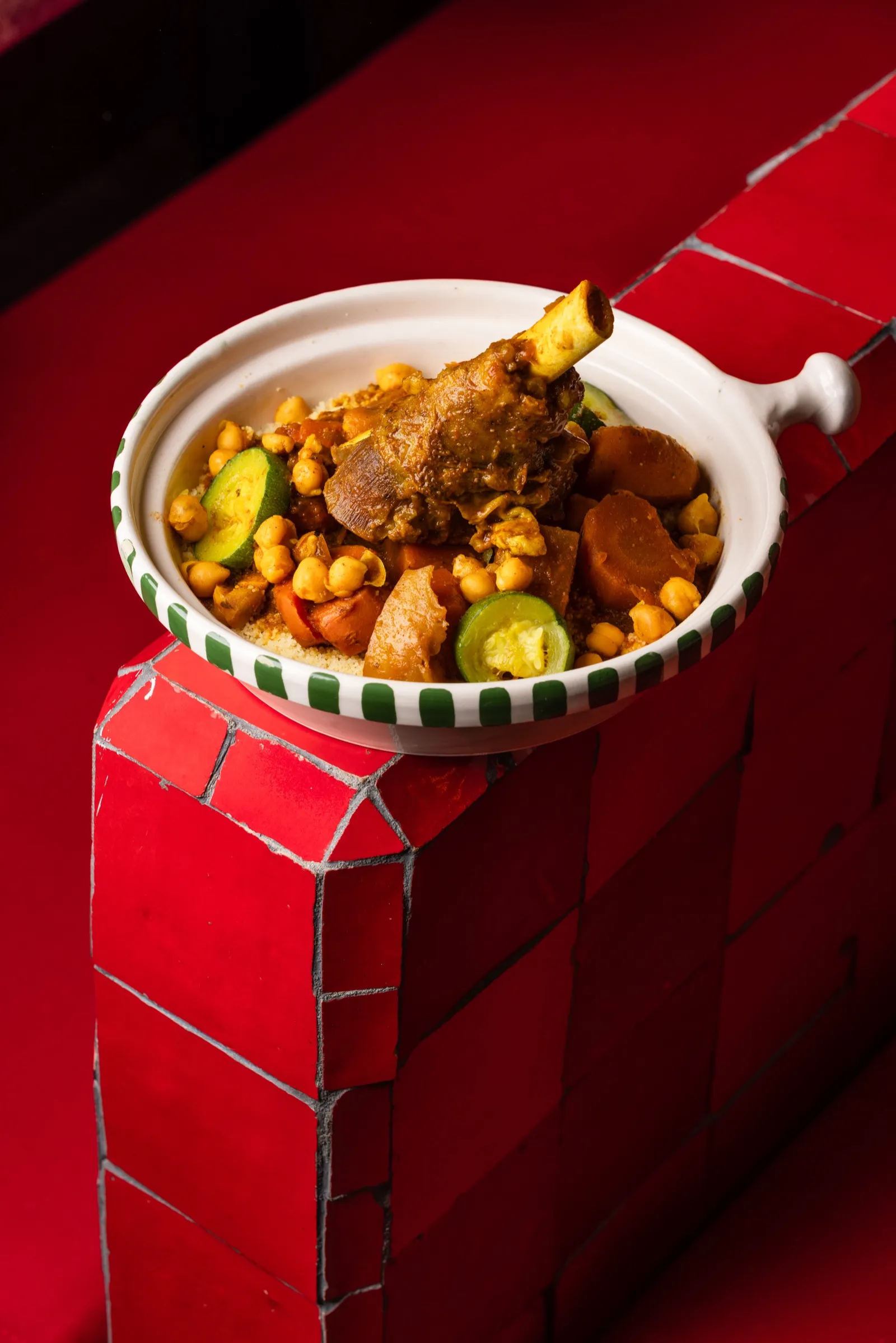
Every Friday, all of Marrakech smells of couscous. It's the day of the great family meal, the moment when the whole family gathers around a monumental platter of semolina, vegetables and meat. In Marrakech homes, Friday couscous is sacred.
The Marrakech version often features pumpkin, turnips, carrots and courgettes, all crowned with tender lamb. The broth, fragrant with spices and smen (traditional aged butter), is poured generously over the semolina.
Jemaa el-Fna skewers
It's impossible to speak of Marrakech's specialities without mentioning the skewers of Jemaa el-Fna square. Every evening, dozens of grills light up and fill the square with aromas. Kefta, liver, heart, merguez: everything is grilled to order before your eyes, served with fresh bread and a tomato salad.
It's Marrakech street food in all its splendour: direct, generous, flavourful.
Msemen and early morning crepes
Marrakech breakfast is a moment apart. Msemen — that golden layered crepe — is sold on every corner from dawn. Paired with honey and melted butter, it's the morning fuel of Marrakchis. Baghrir, the thousand-hole pancake, completes this gourmet morning scene.
Spiced snails
In the late afternoon, snail vendors set up their steaming pots in the medina alleyways. The snails bathe in a broth fragrant with thyme, liquorice and spices. Served in small bowls, they are Marrakchis' favourite snack: comforting, fragrant, addictive.
Moroccan pastries
No Marrakech meal is complete without pastries. Gazelle horns, honey and sesame chebakia, almond briouates, ghriba: Moroccan patisserie is an art that blends delicacy and generosity. In the medina shops, these sweet treasures are stacked in pyramids that invite indulgence.
Mint tea
The final note of every Marrakech meal, mint tea is far more than a drink: it's a ritual. Poured from high to oxygenate it, generously sweetened, fragrant with fresh mint, it marks the end of the meal and the beginning of conversation. In Marrakech, refusing a tea would be almost rude.
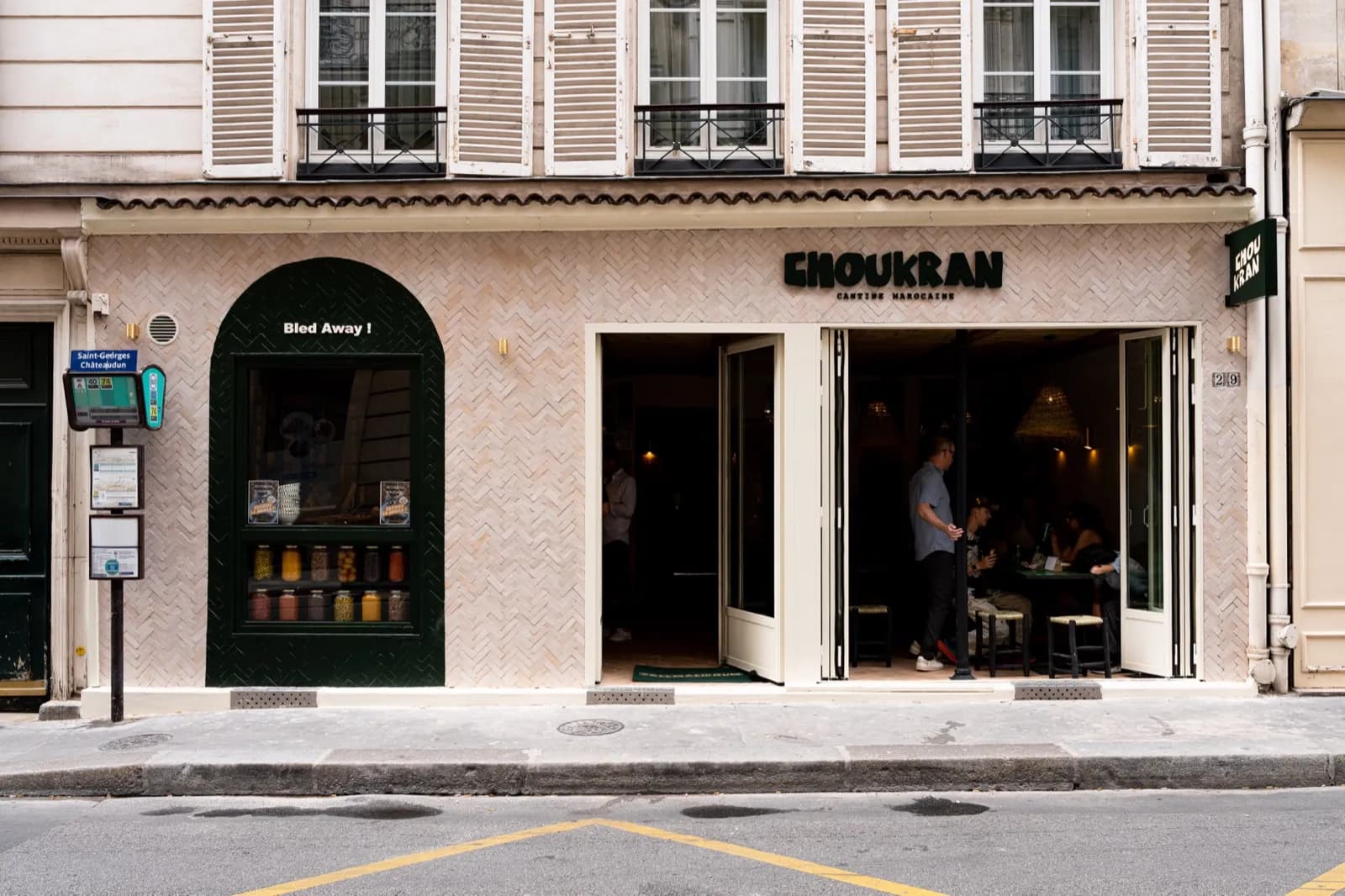
Each of these specialities carries a fragment of the Marrakech soul. And it is this richness we try to convey at Choukran, one dish at a time.