Homemade couscous is not a simple recipe. It's a ritual. An act of love that requires time, patience and a savoir-faire passed down through generations. In Morocco, making couscous is like telling a story: you need the right rhythm, the right ingredients, and above all, the right state of mind.
It all starts with the semolina
Semolina is the soul of couscous. In traditional Moroccan families, it is still rolled by hand: semolina is poured into a large gasaa (wooden dish), moistened with salted water, and worked with the fingertips in circular motions to form even grains.
It's a hypnotic, almost meditative gesture that Moroccan grandmothers have perfected. The goal is to achieve fine, separate grains that will swell with steam to become airy and light.
The steam passes
A true Moroccan couscous goes through the steamer three times. This is the golden rule, the one that makes all the difference between ordinary and exceptional couscous.
First pass: the dry semolina is placed in the upper part of the couscoussier, above the broth that is beginning to simmer. The grains gently hydrate in the steam for about twenty minutes.
Between passes: the semolina is removed, poured into the gasaa, aerated with the fingers, any lumps broken up, a little water added, a drizzle of olive oil and a pinch of salt. Left to rest.
Second pass: the semolina returns to the couscoussier. The grains swell, absorbing the aromas of the broth simmering below. The fragrance already escaping is a promise.
Third pass: the pass of perfection. The semolina is light, each grain separated, the texture ideal. A final knob of butter is added, melting into the hot grains.
The broth: the heart of flavour
While the semolina undergoes its transformation, the broth builds in the lower part of the couscoussier. It's what gives couscous its depth.
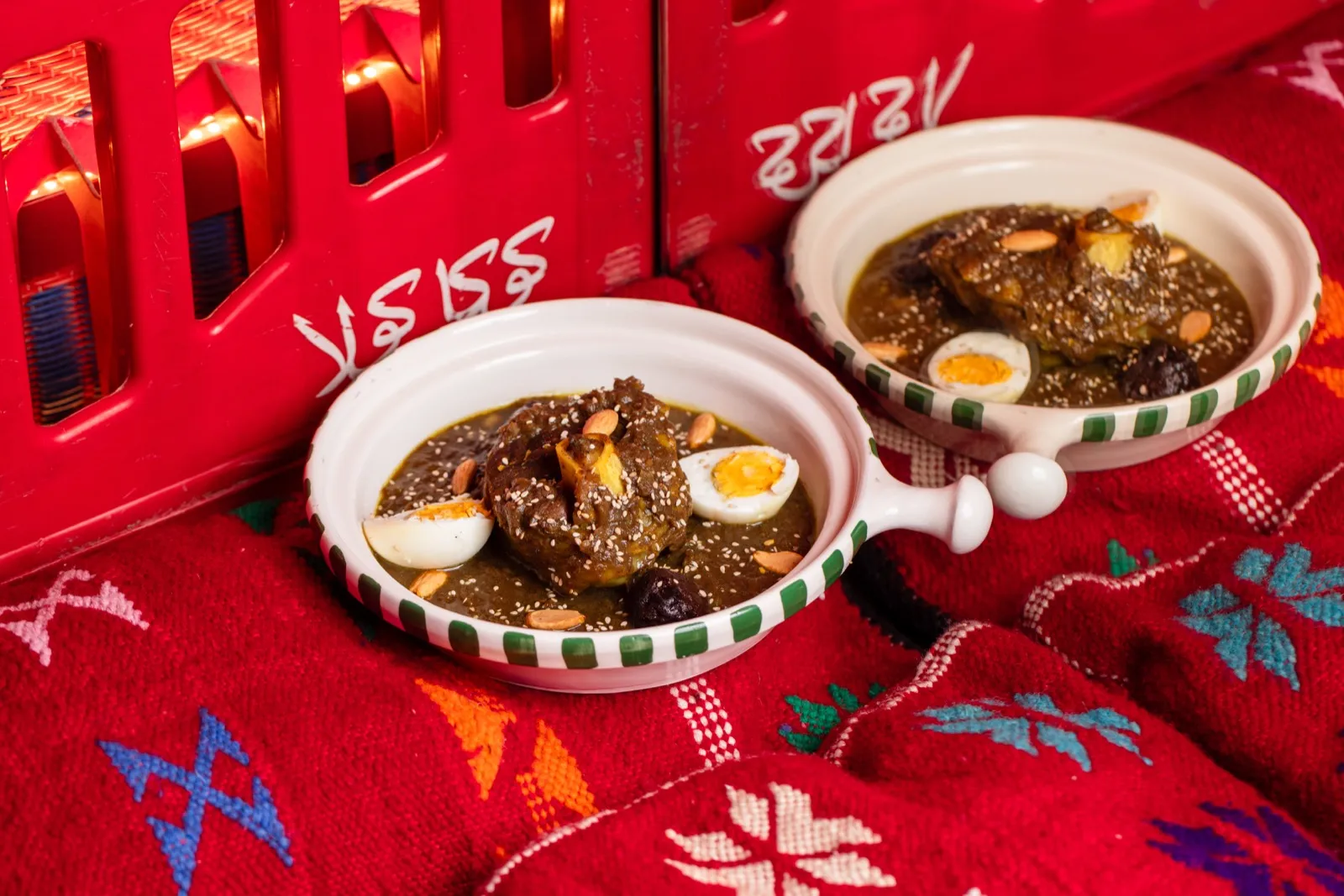
Start by browning onions, then add the meat — lamb, chicken or beef depending on the family. Spices come into play: cumin, turmeric, ginger, pepper, a touch of saffron for the indulgent. Then fresh tomatoes, tomato paste, olive oil.
The broth must simmer for a long time. The longer it cooks, the more it concentrates, the more flavour it develops. Patience creates taste.
The vegetables: a progressive entry
Vegetables don't all enter the broth at the same time. Each has its moment.
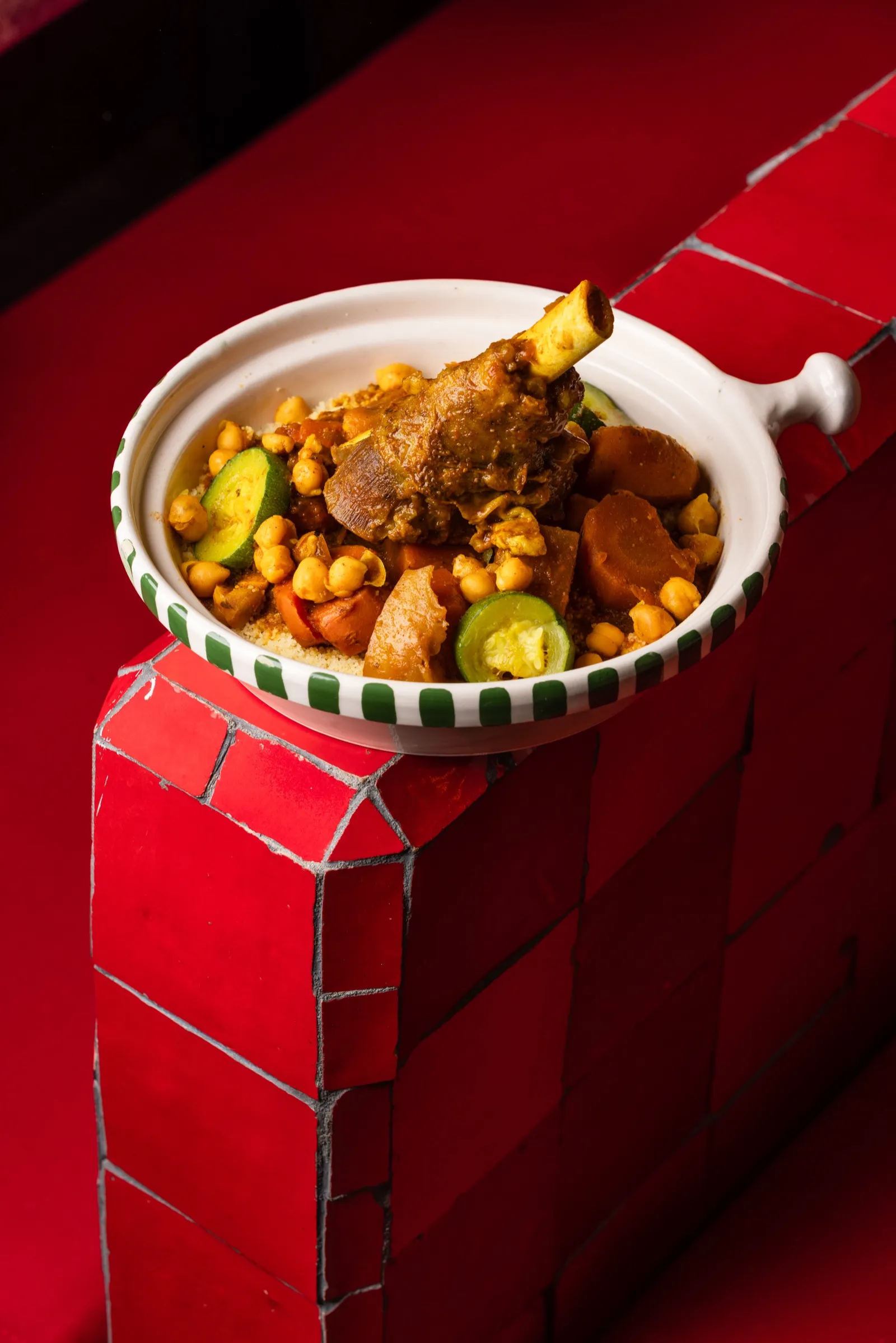
The hardiest go first: turnips and carrots, which need time to become tender. Then come courgettes, pumpkin, cabbage. Finally, chickpeas — soaked overnight — and broad beans if they're in season.
The idea is that each vegetable is cooked just right: neither too firm nor too soft. A balance that only experience can master.
Plating: a solemn moment
Plating couscous is an art in itself. The semolina is poured into a mound on a large dish — the serving gasaa — then a crater is hollowed out in the centre. Vegetables are arranged harmoniously around it, the meat sits enthroned at the summit, and broth is poured generously.
In Morocco, couscous is eaten directly from the communal dish, with the fingers or a spoon. It's an act of total sharing, where everyone takes from their side of the dish.
The family moment
But the true secret of homemade couscous lies neither in the semolina nor in the broth. It lies in the moment. In Morocco, couscous means Friday. It's the day the family reunites, children come home, grandparents tell stories.
Around the couscous, people talk, laugh, remember. The dish is at the centre, and around it is life.
Infinite variations
Moroccan couscous comes in endless variations. Couscous tfaya — with its topping of honey-glazed onions, raisins and toasted almonds — is the festive version. Seven-vegetable couscous is the Friday classic. Fish couscous is the pride of the Atlantic coasts. Sweet couscous with raisins and cinnamon sometimes closes grand meals.
Each family, each region adds its touch. It is this diversity that makes Moroccan couscous inexhaustible.
The philosophy of patience
Making homemade couscous means accepting to take your time. No shortcuts, no microwave, no instant semolina. Couscous must be earned. It requires hours of preparation, repeated gestures, constant attention.
But it is in this slowness that magic is born. Every grain of semolina that has passed through three steamings carries the fragrance of the broth, the warmth of the kitchen, the love of the person who prepared it.
"Couscous isn't a dish you make. It's a dish you live." — Chef Abdel
FAQ
- What is the secret to a real Moroccan couscous?
- Steaming the semolina and slowly preparing the broth are the two most important elements.
- What meat is used in Moroccan couscous?
- Traditionally, lamb or chicken are the most commonly used meats depending on the region and family.
- Why is couscous associated with Friday in Morocco?
- Because it has historically been the great family meal shared after Friday prayers.
- What vegetables are found in Moroccan couscous?
- Carrots, turnips, courgettes, pumpkin, cabbage and chickpeas are among the most common ingredients.
- What is the difference between Moroccan couscous and royal couscous?
- Traditional Moroccan couscous relies on the balance between semolina, vegetables and a single main meat, while royal couscous is an adaptation popularised in France with several meats served simultaneously.