Abdel Alaoui did not learn to cook in a school. He has no diploma on the wall, no white toque in a cupboard, no famous master to name. His school was a kitchen. His mother's kitchen. In a house in the Rif, somewhere between the mountains and the sea.
Childhood in Morocco
Abdel grew up with smells. The smell of bread baking in the earth oven. The smell of fresh mint in the morning. The smell of cumin toasting in the pan. The smell of harira announcing Ramadan. Those smells, he never forgot them. They became his compass, his vocabulary, his language.
In the Rif, cooking is not a hobby. It's an act of survival, of tenderness, of transmission. Women cook to nourish, to love, to say what they don't say in words. And children learn by watching.
The mother as first school
Abdel's mother never opened a recipe book. She didn't need one. Her hands knew. They knew the exact amount of salt, the precise moment to take the meat off the fire, the right pressure to roll couscous. This knowledge cannot be written down. It is lived.
Abdel watched her every day. Standing in a corner of the kitchen, he observed, memorised, secretly tasted. He didn't know it yet, but he was becoming a cook. Not through training. Through love.
Emotion before technique
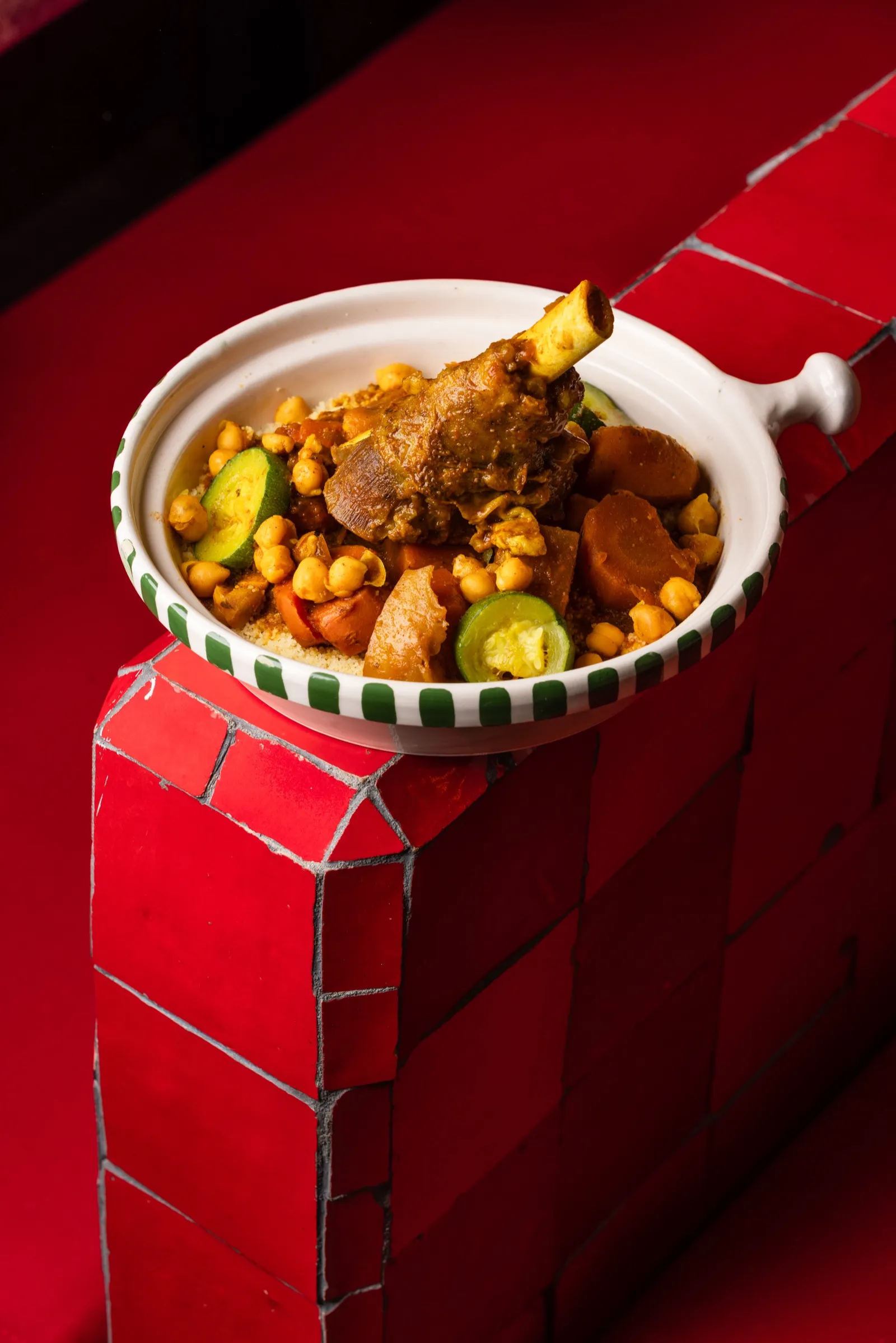
What sets Abdel apart from many chefs is that he cooks with emotion before technique. Every dish he prepares is a memory. The prune tajine is his grandmother's celebration meal. The harira is breaking the fast with family. The couscous is Friday, the family gathered, the dish placed at the centre of the table.
For him, cooking is not a profession. It's an extension of who he is. A way of telling where he comes from without saying a word.
Ambassador of Moroccan cuisine
Over the years, Abdel has become an ambassador of Moroccan cuisine in France. Through media, television appearances, books and restaurants. But he has never changed his philosophy: stay true to what he received.
His cooking doesn't seek to impress guides. It seeks to touch hearts. To transport. To remind every Moroccan in France of the taste of home. And to show others the full beauty of a gastronomy too often reduced to clichés.
Refusing to choose
Abdel refuses to choose between tradition and modernity. He rejects folklore as much as rupture. His cooking is a bridge: it respects every gesture learned from his mother while placing it in a contemporary language. The produce is noble, the presentation is refined, but the soul remains familial.
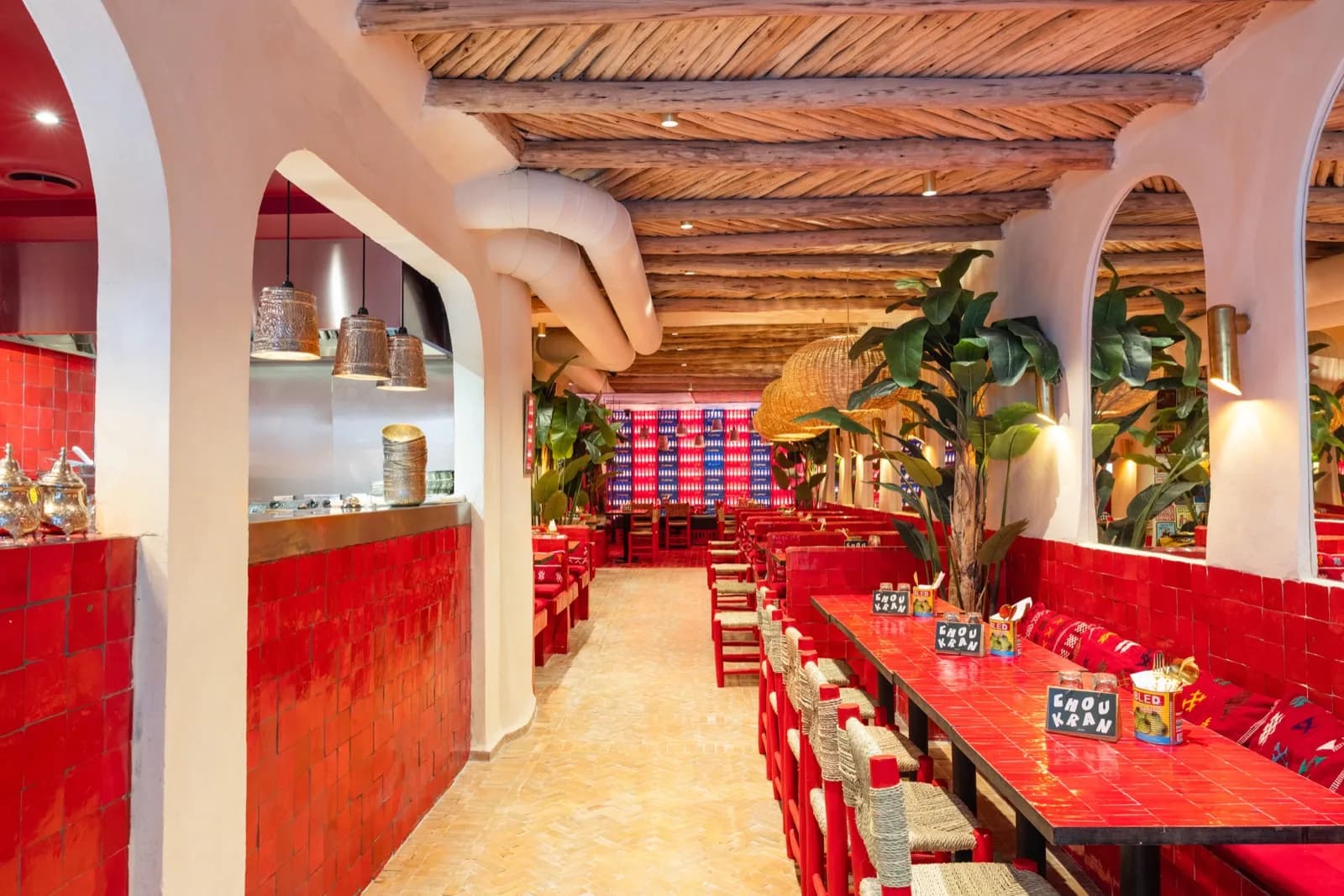
It's this creative tension that makes Choukran singular. A restaurant that looks like no other. Neither frozen traditional, nor disconnected fusion. Something authentically modern. Or modestly authentic.
The birth of Choukran
Choukran was born from a need. The need to share. The need to show what Moroccan cuisine can be when carried by someone who lived it from the inside. Not a marketing concept, not a trend: an act of truth.
The name "Choukran" means thank you in Arabic. Thank you to his mother, who taught him everything without writing anything down. Thank you to Morocco, which gave him an immense heritage. And thank you to all those who sit at his table and agree to taste a piece of his story.